
AI in Nursing: How Technology Is Changing the Future of Healthcare
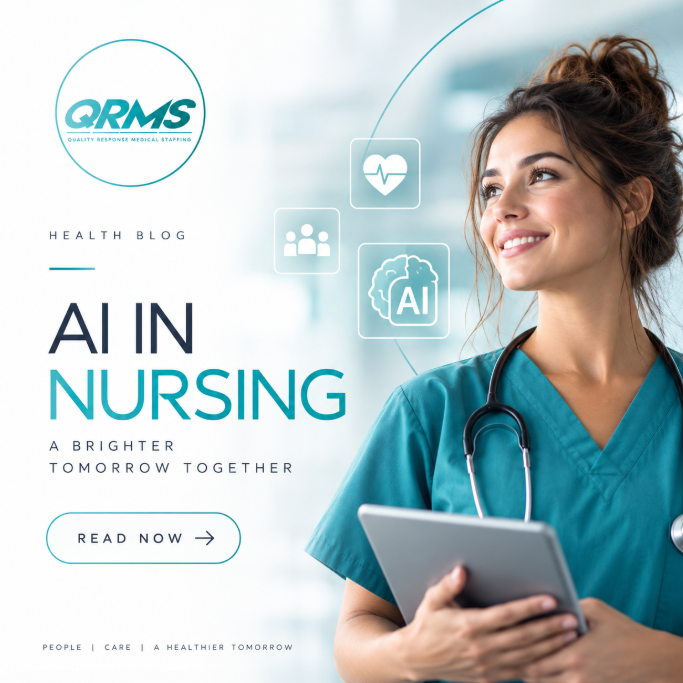
Artificial intelligence is changing healthcare—and nurses are right at the center of that transformation.
From reducing administrative tasks to helping healthcare teams identify patient risks, AI is becoming an increasingly important tool in modern healthcare. But while technology continues to evolve, one thing remains unchanged: the importance of compassionate, skilled nurses.
How Is AI Changing Nursing?
Nurses already manage an enormous amount of information every day. AI-powered tools can help organize and analyze that information, allowing nurses to spend more time focused on what matters most: their patients.
Some ways AI is being used in healthcare include:
Clinical decision support: Technology can help identify patterns in patient data and alert healthcare professionals to potential concerns.
Documentation: AI-assisted documentation can reduce the time nurses spend on repetitive administrative tasks.
Patient monitoring: Smart monitoring systems can help detect changes in vital signs and other patient information.
Scheduling and staffing: Healthcare organizations can use technology to improve staffing efficiency and match resources with patient needs.
Education and training: AI tools can support personalized learning and professional development for healthcare workers.
Will AI Replace Nurses?
The short answer: No.
Nursing requires far more than processing information. Nurses provide empathy, communication, clinical judgment, advocacy, reassurance, and human connection.
A computer can identify that a patient's vital signs have changed. A nurse can recognize that the patient is scared, understand what they are trying to communicate, and provide reassurance while taking appropriate action.
The future of nursing is not necessarily nurses versus technology. It is nurses using technology to become more efficient while maintaining the human side of healthcare.
The Skills Nurses Will Need in the Future
As technology becomes more integrated into healthcare, nurses may benefit from developing skills beyond traditional clinical knowledge.
1. Technology Confidence
Nurses don't need to become software engineers, but being comfortable learning and using new technologies will become increasingly valuable.
2. Critical Thinking
Technology can provide information, but nurses still need to evaluate that information and apply clinical judgment.
3. Communication
Strong communication skills will remain essential. In fact, as technology handles more administrative tasks, human connection may become even more valuable.
4. Adaptability
Healthcare is constantly changing. Nurses who are willing to learn, adapt, and embrace new tools can position themselves for exciting opportunities.
The Human Side of Nursing Still Matters Most
Technology can make healthcare faster and more efficient, but it cannot replace the human relationship between a nurse and a patient.
The future of nursing will likely combine advanced technology with compassionate care.
For nurses, that means the opportunities ahead may be bigger than ever.
For healthcare organizations, it means finding talented nurses who can adapt to an evolving healthcare environment is more important than ever.
Ready for What's Next in Your Nursing Career?
At Quality Response Medical Staffing (QRMS), we understand that healthcare is constantly evolving—and exceptional nurses are essential to keeping it moving forward.
Whether you're looking for your next nursing opportunity or a healthcare organization seeking dependable staffing solutions, QRMS is here to connect talented healthcare professionals with the opportunities and teams where they can make a difference.
The future of healthcare is changing. Your career can change with it.
Explore opportunities with QRMS today.